REVIEW · TOKYO
Hakone Private One Day Tour From Tokyo: Mt Fuji, Lake Ashi, Hakone National Park
Book on Viator →Operated by Japan Awaits · Bookable on Viator
Volcano steam and Fuji views in one day. This private Hakone tour runs from Shinjuku with an express train and includes major rides like the Hakone Ropeway and Lake Ashi cruise, plus guided context on how this area was shaped by volcanic eruptions. You’ll also be able to adjust your day as you go, instead of being locked into a one-size schedule.
I love the private setup for your party, so you can ask questions and set your own pace without waiting on strangers. I also love that the guide brings meaning to what you’re seeing, and one guest specifically praised guide Izumi Aizawa for staying attentive and helping the group hit the best moments when the weather cooperated.
The main drawback is that it’s a full 8–10 hour day, and some signature Mt Fuji views and activities are tied to weather-dependent conditions. Meals and drinks aren’t included either, so plan on buying your own lunch and snacks, plus optional add-ons cost extra.
In This Review
- Key things that make this Hakone tour work
- Private Hakone, not a cattle-car day
- From Shinjuku 7:30 am to Hakone: start time and setup
- Ōwakudani volcanic valley: sulfur vents and smart timing
- The Hakone Ropeway funitel ride: views without the steep hassle
- Hakone Open-Air Museum: a museum day that still feels like outside
- Old Tōkaidō walk by Lake Ashi: the calm break in a busy day
- Hakone Shrine and Lake Ashi cruise: the classic postcard, with context
- Hakone Gōra Park: botanical garden calm and a tea-house pause
- Narukawa Art Museum: Nihonga style with city views
- Mt Hakone area: understanding the volcano in human terms
- Optional add-ons: Mt Komagatake, tea ceremony, onsen time
- Peak season reality: traffic and the Mt Fuji visibility gamble
- Price and value: what $238.45 covers
- Who this tour is ideal for
- Should you book this Hakone private one-day tour?
- FAQ
- How long is the Hakone Private One Day Tour from Tokyo?
- Where do you meet, and what time does the tour start?
- Is transportation inside Hakone included?
- Are meals included?
- What is included for Mt Fuji views?
- Is the tour refundable if plans change?
Key things that make this Hakone tour work
- Express train from Shinjuku that cuts the stress of planning your own route and transfers
- Ōwakudani + Hakone Ropeway for dramatic volcanic-valley panoramas and easy transport between sights
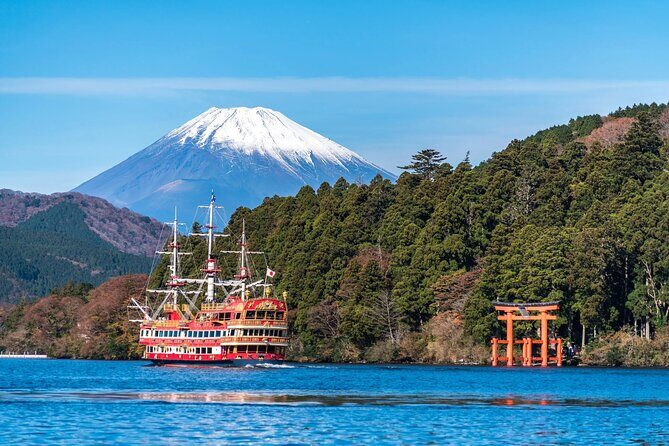
- Lake Ashi cruise and Hakone Shrine for that classic pirate-ship lake moment with Mt Fuji when skies allow
- Art and garden stops with discounted entries so your day isn’t only sightseeing, it’s also a cultural break
- Private flexibility to swap in optional experiences like tea ceremony or the Mt. Komagatake ropeway
- Hakone logistics handled for you including local bus fares, mountain train, cable cars, and key entrance fees
Private Hakone, not a cattle-car day
Hakone is one of those places that’s easy to over-plan. You can buy tickets, download route apps, and still end up spending your day waiting for the next bus or figuring out which lift connects to where. This tour is built to remove that friction. You’re transported from Tokyo to Hakone by express train, then you move around the Hakone area with covered local transportation options and guided transitions.
The private part matters more than you might think. You’re not stuck with a fixed group pace, and you’re able to steer the day based on what you care about most. If you want more time on scenic viewpoints, you can ask for it. If you’d rather keep walking light, you can plan around it with your guide.
You also get the kind of guidance that turns photo stops into stories—why the volcano shaped this region, what you’re actually looking at on Lake Ashi, and what the shrines and old roads were built for. That guidance is especially useful if it’s your first time in Hakone and you want to understand the area instead of just collecting checkmarks.
More Mt Fuji & Hakone tours we've reviewed
From Shinjuku 7:30 am to Hakone: start time and setup
The day starts at 7:30 am at Shinjuku West Exit HALC (Halc1-chōme-5-1 Nishishinjuku, Shinjuku City). It returns to the same meeting point at the end of your tour. That round-trip “back where you started” matters on a long day, because you don’t need to recalibrate transportation once you’re tired.
You’ll want to plan to arrive a bit early. The guide will only wait for up to 30 minutes after the start time, and you’re asked to arrive at least 10 minutes before. Bring your passport, because it may be required for transportation on tour day.
One practical advantage: transportation inside Hakone can be done by public transportation or by private car, chosen at checkout. If you’re traveling with anyone who prefers less walking, or if you simply want less schedule stress, that’s an easy lever to pull.
The tour runs about 8 to 10 hours, so you’ll be at your best if you treat it like a single big outing, not something you’ll sprinkle between errands.
Ōwakudani volcanic valley: sulfur vents and smart timing
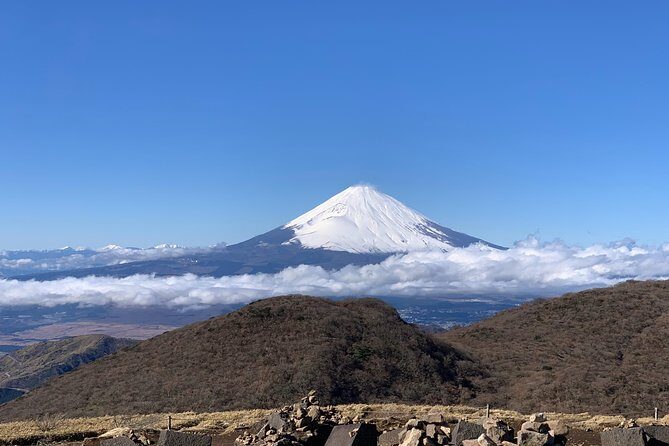
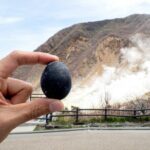
Ōwakudani is Hakone’s famous volcanic valley, formed by the eruption activity tied to the Hakone volcano about 3,000 years ago. This is the part where the scenery feels real and a bit intense. Active sulfur vents and the geothermal atmosphere are the headline, and your guide’s job is to help you understand what you’re seeing and how the volcanic landscape works.
Expect short bursts of walking and viewing time rather than a long hike. You’ll also likely move through the area using the Owakudani Ropeway when conditions are good. The key point: if the weather is clear, this is one of the best places for dramatic panoramas, including the chance of Mt Fuji views.
Practical tip: dress for cool, changeable weather. Volcanic valleys can feel different from the rest of Hakone, and you’ll want layers you can adjust quickly. Also, keep your pacing steady. You’re not just sightseeing—you’re moving through a place with active geothermal activity, so take your time and watch your footing.
The Hakone Ropeway funitel ride: views without the steep hassle
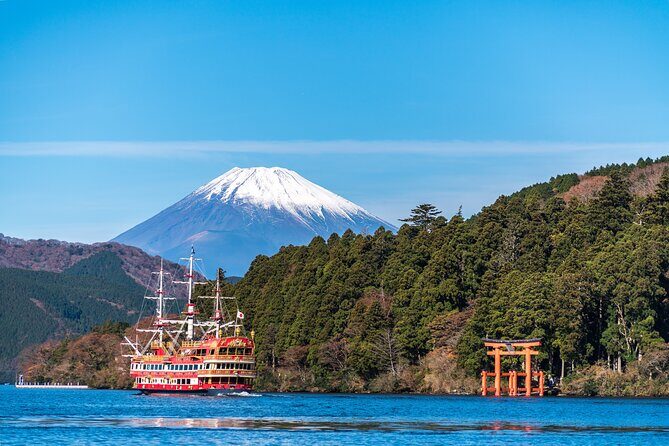
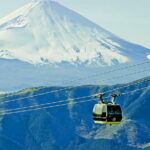
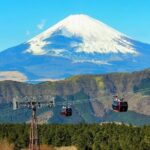
The ropeway component links Sōunzan and Tōgendai via Ōwakudani. It’s run as a funitel line, which is essentially an aerial lift designed for stability across the terrain. Even if you’ve ridden cable cars before, the Hakone Ropeway is worth it because it gives you a clean vertical angle into the caldera world below.
This ride tends to be a highlight for people who like views that feel more “over the whole map” than postcard-close. You’ll spend less energy than if you tried to connect viewpoints only by walking and buses, and your schedule stays tighter.
The one thing to watch is weather. The tour notes that in good weather you’ll get the more memorable Mt Fuji moments as part of the day’s included viewing plans. If it’s foggy or rainy, you still get transport and scenery, but the Mt Fuji payoff may be reduced.
Hakone Open-Air Museum: a museum day that still feels like outside
Hakone Open-Air Museum is Japan’s first open-air museum, and it opened in 1969 in the Hakone area. The setting is part of the experience—art outdoors changes how you look at sculpture, and it breaks up the day’s walking with a different kind of pace.
You’ll get discount entrance fees for the museum, and the tour also lists optional add-ons if you want a more specific focus such as Picasso-related gallery time. That’s helpful because you can match the museum portion to your interests: quick art wander, or a deeper museum session.
A practical note: open-air museums are weather-dependent in the same way as any outdoor site. If it’s raining, plan on going slowly and accepting that you might not get the most dramatic viewpoint light. If it’s clear, you can turn this stop into an easy reset where your brain switches gears from volcano and lake to art and design.
Other Tokyo + Mt Fuji + Hakone combo tours we've reviewed
Old Tōkaidō walk by Lake Ashi: the calm break in a busy day
One included element is a 30-minute walk along the Old Tōkaidō Road near Lake Ashi. This is a smart choice because it adds texture. You’re not only riding lifts and cruises; you’re also walking a historic route style landscape, which helps the whole Hakone story connect.
If you like when a trip feels lived-in and layered, you’ll enjoy this. Even in a single day, the old roadside vibe makes the area feel more than scenic—it feels human.
This is also a good time to slow down your legs before the more “moving” parts of the day. Just wear comfortable shoes. Hakone days can feel longer than the 8–10 hour estimate once you add stairs, waiting, and photo pauses.
Hakone Shrine and Lake Ashi cruise: the classic postcard, with context
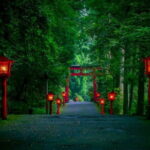
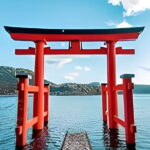
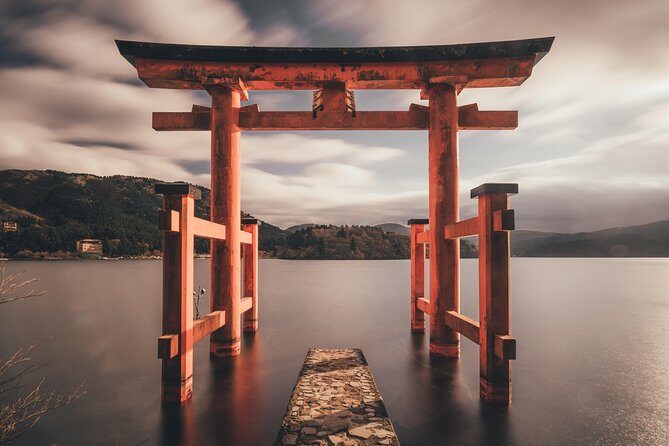
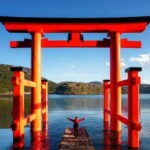
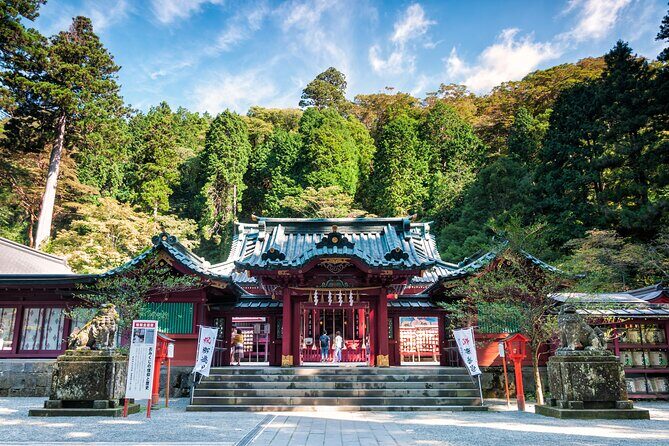
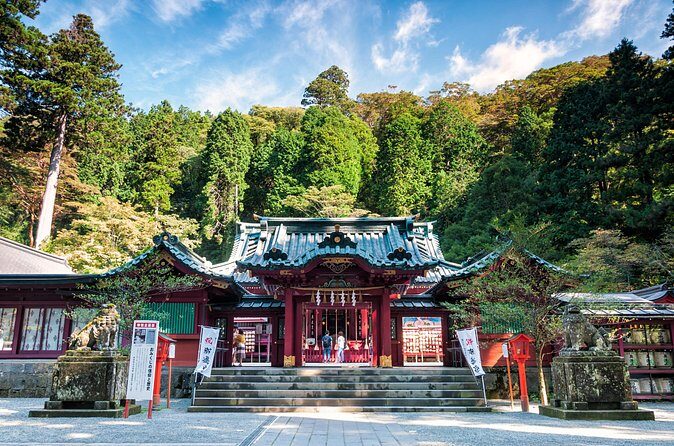
Hakone Shrine sits on the shore of Lake Ashi, also known as Hakone Gongen. It’s a Shinto shrine, and the details matter here. Your guide can connect the shrine’s identity to the local beliefs, including the association with a dragon god linked to luck in money, business prosperity, and general wellbeing.
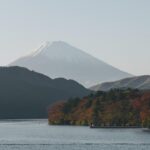
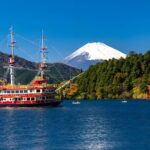
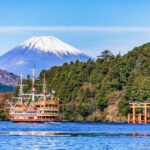
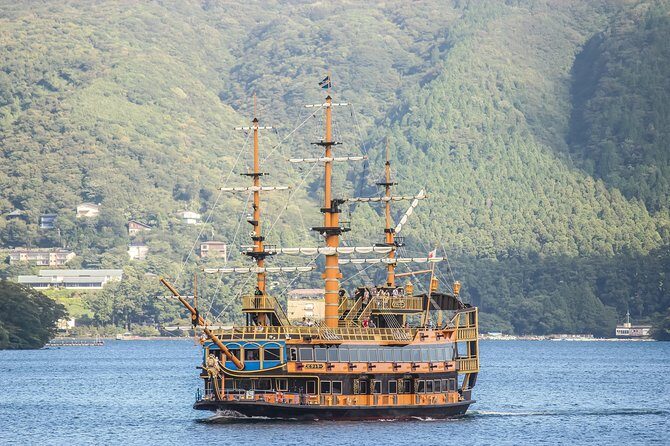
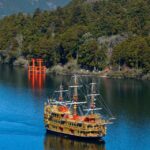
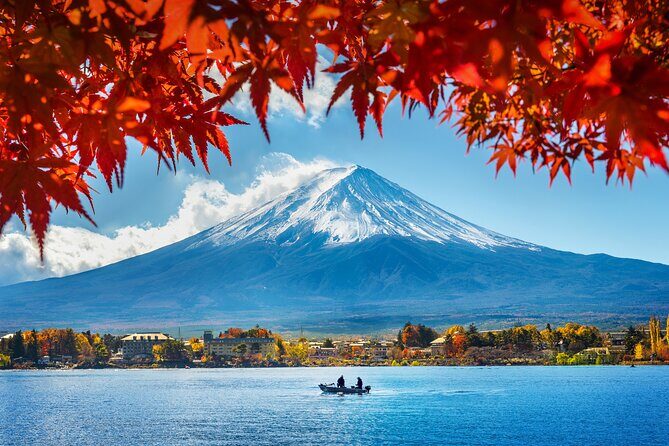
Then you’ll head onto Lake Ashi for a cruise. The included experience is a Lake Ashi cruise that, in good weather, can pair with Mt Fuji views. The ship type described is a two-part, more classic style experience often referred to as a pirate ship—this is the moment where you get that signature lake stillness and long-distance perspective.
The best way to enjoy the cruise is to treat it as a viewing window. Don’t rush for photos immediately. Let the shoreline come to you, then take photos when angles open up. If Mt Fuji appears, it’s usually in flashes when clouds shift, not as a constant reveal.
Hakone Gōra Park: botanical garden calm and a tea-house pause
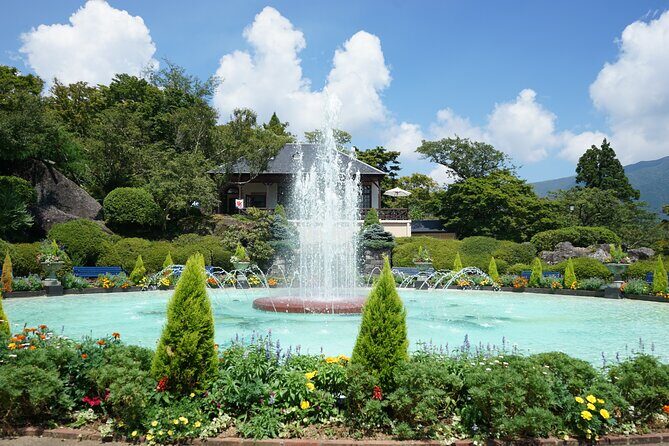
One of the included stops is Hakone Gōra Park, a western-style hillside botanical garden with greenhouses, a central fountain, and a tea house. This is a valuable counterbalance to volcanic steam and ropeway rides.
If your legs are tired, this is where you can slow down. Gardens give you “sit and breathe” options that keep the day from feeling like a checklist sprint. Even if you don’t do tea or ceremony options, the atmosphere helps you absorb the views around Gōra.
Also, having a scheduled break in the day is just smart planning. Hakone can be busy, especially in peak seasons, and having a calmer stop keeps the whole outing feeling more enjoyable.
Narukawa Art Museum: Nihonga style with city views
Another included discount stop is Narukawa Art Museum, opened in 1988. The focus is on Nihonga-style paintings, plus city views, a café, and gardens.
This museum works well in a one-day plan because it adds culture without demanding a marathon. It gives you a chance to slow down again, with indoor-outdoor flexibility depending on weather. If Mt Fuji is visible that day, you may get a view angle from the museum grounds, which makes it a good choice for people who want one more shot at clear-weather scenery.
Since meals aren’t included, the museum café can be a practical place to grab something if timing lines up. Even a small snack here can keep the day from turning into a late, hungry scramble.
Mt Hakone area: understanding the volcano in human terms
The itinerary includes Mount Hakone, described as a complex volcano truncated by overlapping calderas. That kind of description can sound technical, but here’s why it matters to you: seeing the volcano’s shape from different angles helps you understand why Hakone has hot springs, volcanic vents, and that dramatic geography everyone travels for.
Your guide can tie the volcano story back to the rest of the day—Ōwakudani’s geothermal activity, the ropeway’s big-view angles, and the lake’s position relative to this volcanic bowl.
If you like photos, this is where you’ll notice how the terrain channels views and why certain spots are worth the effort. If you don’t like technical geology, don’t worry. Think of this stop as the explanation that makes the scenery click.
Optional add-ons: Mt Komagatake, tea ceremony, onsen time
This tour includes key experiences, but it also gives you room for upgrades. Optional activities listed include:
- Mt. Komagatake Ropeway (1,300 JPY) with extra ropeway and ship options depending on what you choose
- Gōra Park tea ceremony (500 JPY)
- Hakone Open-Air Museum optional Picasso gallery time (1,600 JPY)
- A more involved combo option around Mt Koma including ropeway + ship fee (2,220 JPY)
- Hakone Yumoto hot bath (1,800 JPY for a public hot bath) with an additional cost for a private indoor bath (+1,000 JPY)
My advice: pick one optional experience max if you want the day to stay pleasant. With a full schedule already built in, multiple add-ons can push you from “flexible” to “rushed.”
Peak season reality: traffic and the Mt Fuji visibility gamble
Hakone can be crowded in autumn foliage season, Golden Week (May 6–27), Obon (Aug 11–20), and New Year holidays (Dec 28–Jan 6). The tour notes that heavy traffic can mean travel between locations by bus can take two to three times longer than usual.
That’s the moment where private guidance helps you more than you might expect. Your guide can adjust pacing so you’re not stuck watching the clock. Still, you should arrive with flexibility in mind during peak periods, and you should understand that Mt Fuji views are not guaranteed.
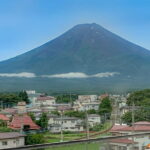
If Fuji is your number-one goal, plan for the possibility that clouds take it away. You’ll still experience Ōwakudani’s volcanic drama and Lake Ashi’s lake beauty, but your photo reward depends on conditions.
Price and value: what $238.45 covers
At about $238.45 per person, this tour is priced like a convenience package with real inclusions. The value comes from what’s bundled:
- English-speaking tour guide
- Round-trip Tokyo-to-Hakone transportation (express train out, then return)
- All transportation fees within Hakone, including Hakone bus fares, mountain train, and cable cars (plus ropeway and cruise planning in good weather)
- Entrance fees for Hakone Gōra Park and the Old Tōkaidō Road walk portion (30 minutes)
- Discount entrance fees for Hakone Open-Air Museum, Narukawa Art Museum, and the Hakone Barrier Station
- In good weather: Ōwakudani Ropeway and Lake Ashi cruise with Mt Fuji views
Meals and drinks are not included, and optional activities cost extra. Also, the experience is non-refundable and cannot be changed, so only book if your dates are solid.
In plain terms: if you’d rather spend your energy enjoying Hakone instead of timing transfers and ticket lines, the price makes sense. If you love self-guided planning and already know how you’ll move between ropeway stations, you may find a DIY approach cheaper. But for most first-time visitors, paying for the structure is the real bargain.
Who this tour is ideal for
This is a great fit if:
- You want a private day with only your party
- You’re interested in Mt Fuji viewpoints and the classic Hakone circuit
- You don’t want to manage multiple tickets across buses, mountain trains, and ropeways
- You like having art and gardens in the mix, not just scenic rides
It may be less ideal if you’re traveling with limited stamina. The tour asks for moderate physical fitness, and the day includes walking such as the Old Tōkaidō section plus steps and transfers across multiple areas.
Should you book this Hakone private one-day tour?
Book it if you want the Hakone highlights without the logistics headache, and if having an English-speaking guide to explain the why behind the sights matters to you. I’d especially recommend it for first-timers who want Mt Fuji chances, a Lake Ashi cruise, and at least one art-and-gardens reset during a long day.
Skip it if your travel dates are uncertain (the experience is non-refundable), or if you prefer a totally freestyle itinerary with fewer planned stops. Also, if you’re very sensitive to long days, remember the schedule is built for a full 8–10 hours.
If your dates are firm and you’re okay with paying for convenience and organization, this is one of the cleaner ways to experience Hakone in a single day.
FAQ
How long is the Hakone Private One Day Tour from Tokyo?
The tour runs about 8 to 10 hours.
Where do you meet, and what time does the tour start?
You meet at Shinjuku West Exit HALC at 7:30 am, and the tour ends back at the same meeting point.
Is transportation inside Hakone included?
Yes. The tour includes transportation within Hakone, including Hakone bus fares plus mountain train and cable cars.
Are meals included?
No. Meals, snacks, and drinks are not included.
What is included for Mt Fuji views?
In good weather, the tour includes Ōwakudani Ropeway and the Lake Ashi cruise with Mt Fuji views.
Is the tour refundable if plans change?
No. This experience is non-refundable and cannot be changed for any reason.