REVIEW · TOKYO
Mt Fuji and Hakone Private Day Tour
Book on Viator →Operated by Milkyway Tours · Bookable on Viator
A private day trip beats train shuffles. With a dedicated English-speaking driver and hotel pickup, you get a packed route for up to ten hours without the stress of connections. I especially like how you choose between a Mount Fuji or Hakone plan so your day matches what you want to see.
Two things I’d highlight: the itinerary hits multiple top sights in one go, and you’re not stuck waiting on crowded buses. One consideration: several major stops are optional-feeling, because key entrance fees (and the views of Mt Fuji itself) can depend on conditions and what you choose to pay for that day.
In This Review
- Key things to know before you go
- How a private Mt Fuji or Hakone day trip actually feels
- Mt Fuji itinerary: pagoda frames, ice caves, and Fuji reflections
- What to watch for on the Fuji route
- Hakone itinerary: sky bridges, torii gates, and Lake Ashi pacing
- What makes Hakone feel different
- Price, value, and the real cost behind the headline
- Pacing, pickup, and how the driver shapes your day
- Itinerary timing: what a 10-hour day means for you
- What you should bring (so the day stays fun)
- Best for families, groups, and Fuji vs Hakone lovers
- Should you book Mt Fuji and Hakone Private Day Tour?
- FAQ
- How long is the Mt Fuji and Hakone private day tour?
- Is the tour price per person or per group?
- Do I get a choice between Mount Fuji and Hakone?
- What’s included in the tour?
- Are food and drinks included?
- Are entrance fees included for all stops?
- Does the tour include a mobile ticket?
- Is there an overtime charge if the day runs longer than 10 hours?
- What is the cancellation policy?
- What if the weather changes during the day?
Key things to know before you go
- Two distinct routes: Pick Mt Fuji or Hakone, not both in one day.
- Ten hours, hotel-to-hotel: That includes travel time, with an overtime rate if you extend.
- Private, English-speaking driver: You get real pacing control and easier stops.
- A mix of free and paid sights: Some entrances are included as free stops, others cost extra per person.
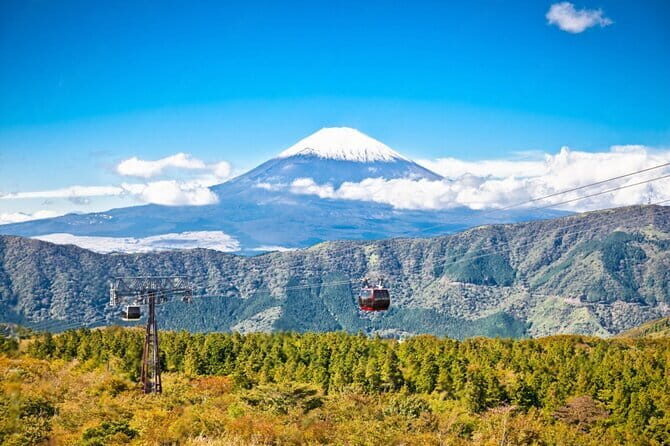
- Iconic viewpoints and lakes: You’re set up for classic panorama-style scenes and time at the water.
How a private Mt Fuji or Hakone day trip actually feels
This kind of tour is for people who want Japan’s big-photo highlights without doing logistics math all morning. You start with pickup from your Tokyo hotel, ride in private transportation with an English-speaking driver, and spend the day visiting a string of famous places rather than bouncing between stations.
What I like is the structure. The day is timed in about one-hour blocks at each stop, and you’re not guessing how to order locations. That matters on Fuji and Hakone days because travel time can quietly eat your sightseeing. Here, the total tour time includes the trip from hotel to hotel, so the day is designed around your time, not around transit timetables.
Also, it’s truly private. It’s only your group in the vehicle, so you can move at a pace that fits your family, your photos, or your tired-knees reality.
More Mt Fuji & Hakone tours we've reviewed
Mt Fuji itinerary: pagoda frames, ice caves, and Fuji reflections
If you select the Mt Fuji route, your day centers on classic Fuji views and nearby lake country. Think pagoda framing, thatched village atmosphere, and volcanic scenery.
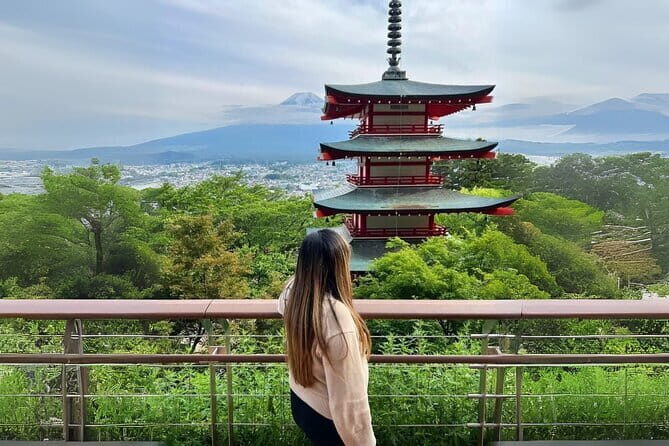
Chureito Pagoda (free, about 1 hour)
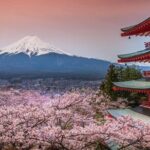
This is the photo magnet: Mt Fuji framed by a five-storied pagoda. Even when the mountain is shy behind clouds, the pagoda setting still gives you that signature postcard look. It’s the kind of stop where you’ll want to slow down and get your bearings before the camera work starts.
Iyashi no sato (¥500, about 1 hour)
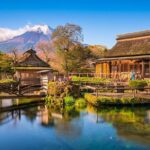
This is where the route shifts from scenic views to cultural texture. You’ll step into a preserved living village of thatched-roof homes. I like stops like this on a day trip because they add variety: you’re not only chasing mountain views, you’re also seeing how people built and lived in this region.
Lake Kawaguchiko (free, about 1 hour)
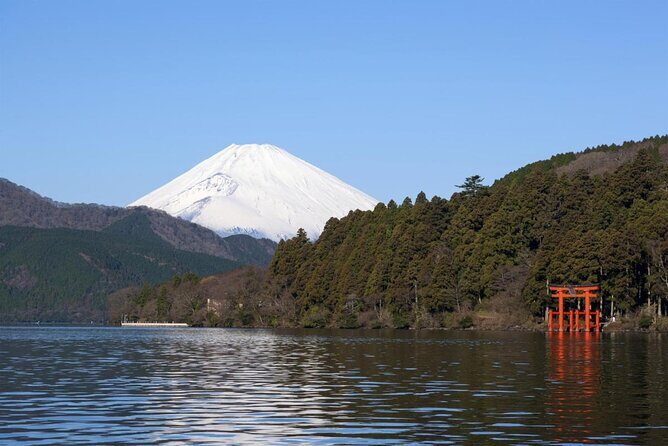
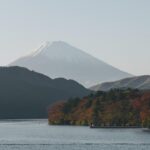
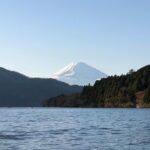
Lake Kawaguchiko is the reflection stop. When skies cooperate, the goal is symmetry—Mt Fuji mirrored in calm water. If visibility isn’t great, you still get the waterfront calm and the sense of the area’s scale.
Oishi Park (free, about 1 hour)
This is the garden-and-flowers angle with Fuji in the background. It’s a “walk and look” place, and it works well for stretching your legs between more structured sights. If you’re traveling in a season with stronger blooms, this stop can feel extra satisfying because you’re getting color plus mountain drama.
Narusawa Ice Cave (¥1,100, about 1 hour)
This is the curveball stop: descending into volcanic caverns with eternal ice. It’s not just a gimmick. The temperature shift and the underground feel make it one of those experiences that adds variety to a Fuji day without needing a complicated plan.
What to watch for on the Fuji route
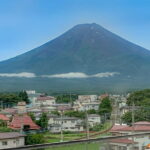
The big question is always how much you’ll actually see of Mt Fuji. One of the main reviews for this tour mentions clouds blocking a view, yet the day still landed as memorable because the itinerary continued with the pagoda, village, and cave-style experience. In other words: you’re not making a single-view bet. You’re stacking multiple “even if the sky changes” stops.
Hakone itinerary: sky bridges, torii gates, and Lake Ashi pacing
Choose the Hakone route if you want lakes, volcanic valley scenery, and a day that feels more like a scenic loop than a strict mountain-focused mission.
Mishima Sky Walk (¥1,000, about 1 hour)
This is a long suspension-bridge walk with panoramic views from above. You’re high enough to feel the drop and broad valley perspective, and the route notes that Mt Fuji can be in the mix on clear days. Even if Fuji is hidden, it’s the kind of view that still gives you a strong sense of place.
Hakone Shrine (free, about 1 hour)
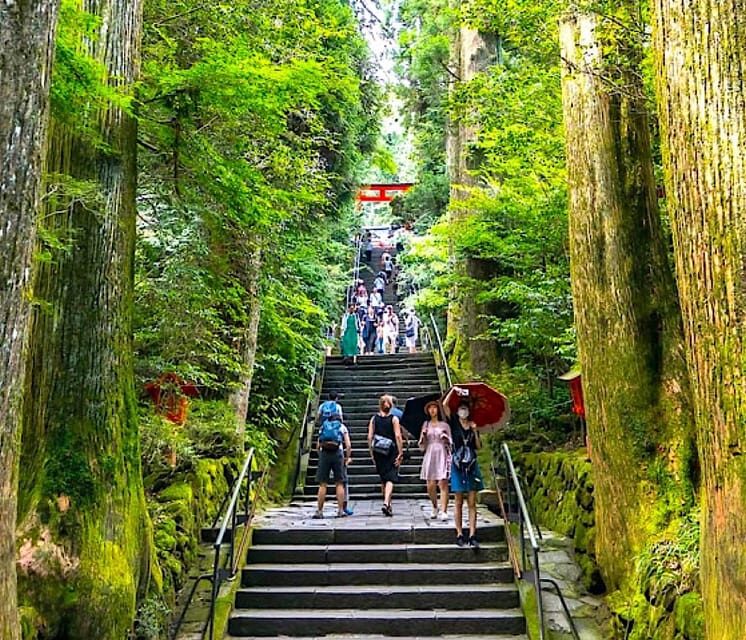
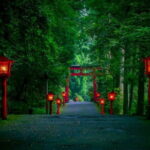
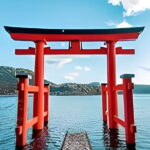
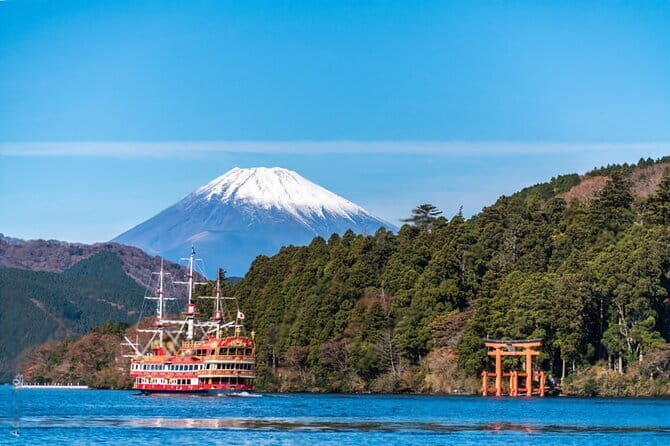
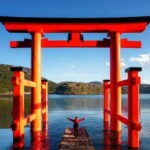
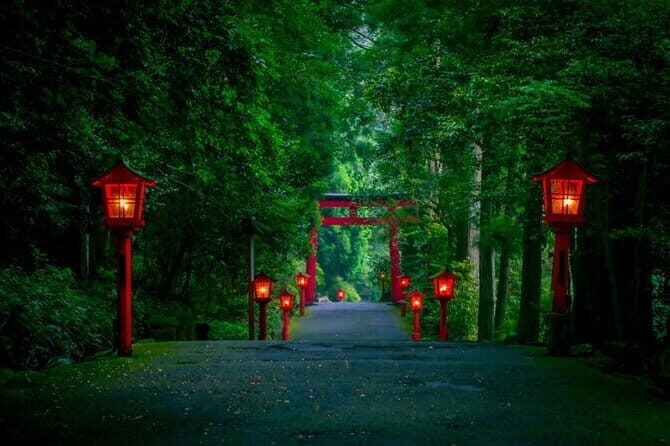
Hakone Shrine is famous for its lakeside torii gates rising from the water. It’s a quieter, slower stop than a bridge or ropeway moment, and it helps balance the more “view-driven” parts of the day.
Hakone Ropeway (¥2,000 one-way, about 1 hour)
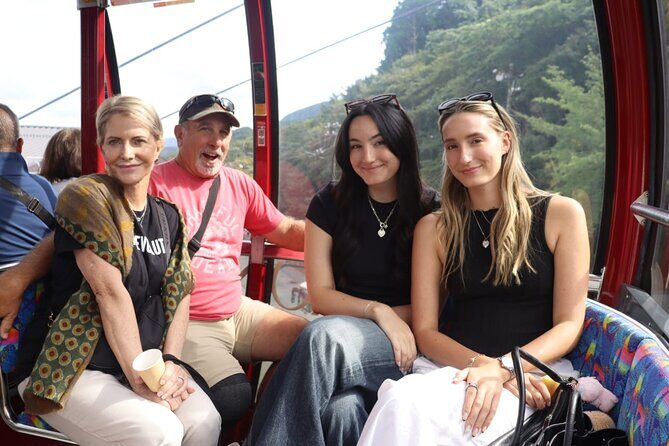
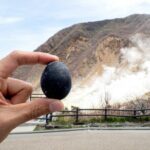
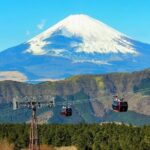
This is your aerial segment over steaming volcanic valleys. It’s the sort of ride that turns the day from sightseeing into an experience you remember. One key detail: since the ropeway is one-way and costs extra, plan your budget with that in mind.
Lake Ashi (free, about 1 hour)
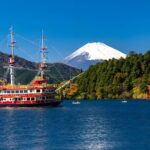
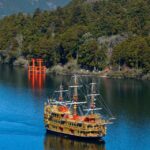
You’ll spend time at the lake and ride aboard a vessel for panoramic vistas. In at least one review, the Hakone boat experience was highlighted as a pirate-cruise style moment. If that theme appeals to your group, this is the stop where that fun factor usually shows up.
Hakone Open-Air Museum (¥2,000, about 1 hour)
This is the art-meets-outdoors stop: sculptures placed in nature-like settings. If you like walking through art without the indoor museum feeling, it’s a strong way to cap a full day of outdoor scenery.
What makes Hakone feel different
Hakone days tend to feel more varied because the route mixes elevation (bridge, ropeway), waterfront calm (shrine, lake), and a longer “look around” stop (open-air museum). I like that balance. It reduces that travel-day fatigue where every stop feels like another line at another viewpoint.
Other Tokyo + Mt Fuji + Hakone combo tours we've reviewed
Price, value, and the real cost behind the headline
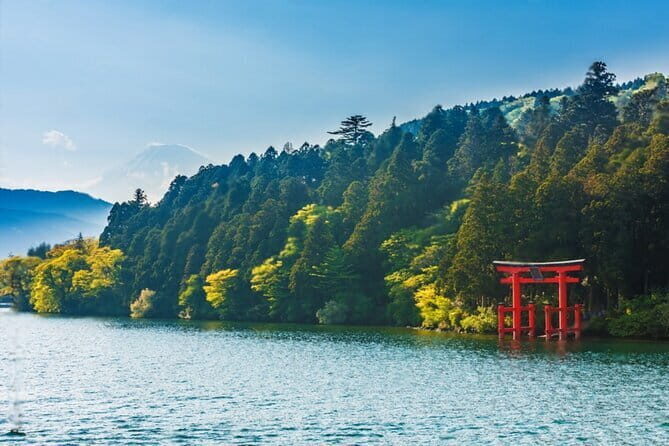
The tour price is $400.59 per group (up to 5), and that’s for the private vehicle plus an English-speaking driver for about 10 hours total (hotel to hotel).
Here’s why that can be good value: you’re paying for convenience, time, and fewer headaches. If you try to piece together Fuji or Hakone with public transport, you can burn hours and still end up improvising. With a private driver, the day’s flow is handled for you, and the route is already structured around the major landmarks.
But you should also budget for add-ons. Food and drinks are not included. Several stops have separate entrance fees per person:
- Iyashi no sato: ¥500
- Narusawa Ice Cave: ¥1,100
- Mishima Sky Walk: ¥1,000
- Hakone Ropeway one-way: ¥2,000
- Hakone Open-Air Museum: ¥2,000
If your group is 4–5 people, the per-person sense of value improves fast because the vehicle cost is shared. If you’re traveling solo or as a couple, it can still be worth it if you value comfort and a tight schedule—but do the math and include entrance fees so you’re not surprised later.
Also keep in mind the overtime charge: ¥5,000 per extra hour after 10 hours hotel to hotel time. That rule matters most if you’re the type who always wants one more stop or you lose time to traffic.
Pacing, pickup, and how the driver shapes your day
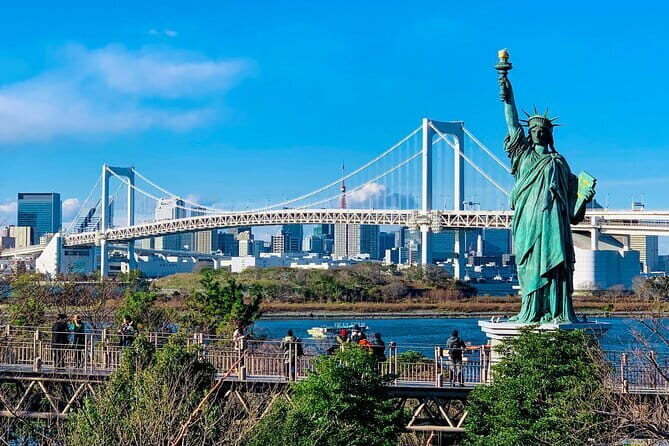
This experience is built around the idea that you don’t want to think about transit. Pickup is offered from your Tokyo hotel, and you’ll have a private vehicle with an English-speaking driver.
The best part of a good driver on a day like this is timing and flexibility. One review praised a driver who was on time, friendly, and courteous. Another mentioned that despite snow and bad conditions on the way up, the driver drove safely and adapted the plan, including adding an alternate stop to escape rain and cold before returning to Tokyo when the weather made the original tour plan impossible.
So while you should be realistic about weather affecting views, the overall takeaway is that the driver isn’t just shuttling. You’re getting someone who manages the day in a practical way.
Itinerary timing: what a 10-hour day means for you

The tour runs for about 10 hours total including pickup and drop-off. Most stops are about one hour each. That schedule is usually long enough to:
- arrive, take photos, and walk at a comfortable pace
- avoid the “five minutes and gone” feeling that some day trips can create
- keep your group from turning grumpy
But it is still a full day. You’ll want to treat it like a day trip marathon: wear comfortable shoes, plan for weather changes (layers help), and keep your meals simple since food and drinks aren’t included.
A practical tip for your expectations: since you only pick one itinerary (either Mt Fuji or Hakone), don’t expect your day to cover both regions. This is not a combo trip. It’s designed to go deep in one theme.
What you should bring (so the day stays fun)
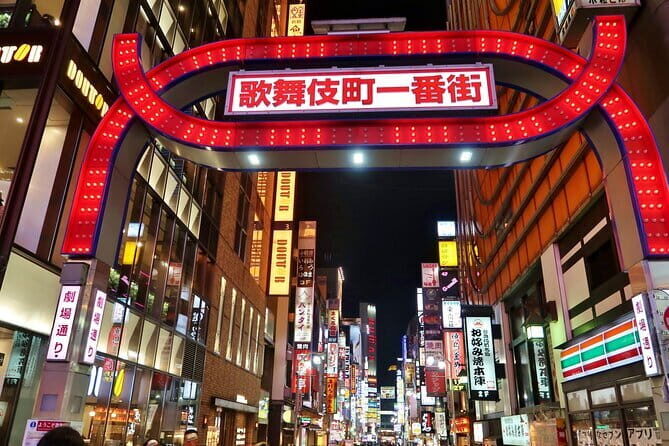
The tour doesn’t include food and drinks, and several stops can involve paying entrance fees on top of the tour price. I’d plan like this:
- bring cash or a card for extra entrances you choose to use
- bring water and snacks if you think you’ll need them between stops
- dress in layers, because mountain and lake areas can feel different from central Tokyo
- pack for walking: you’ll be on your feet at pagodas, parks, bridges, and open-air spaces
If your priority is photos of Mt Fuji, you’ll also want to be ready for changing cloud cover. The itinerary includes multiple scenic stops, which helps even when the mountain is partly hidden.
Best for families, groups, and Fuji vs Hakone lovers
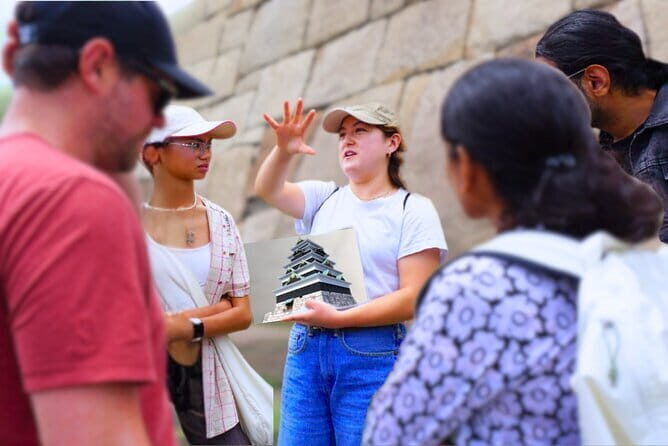
This is a strong fit if you’re:
- traveling with family and want one vehicle and a fixed plan
- short on time in Tokyo but still want a major Japan-region day
- choosing between Fuji-style scenery and Hakone-style scenic loop energy
- interested in a mix of viewpoints and cultural stops (village, shrine, open-air museum)
If you’re mainly chasing one specific thing, decide your route carefully. The Mt Fuji option is about lakes, reflections, the pagoda frame, and volcanic cave curiosity. The Hakone option leans into suspension bridges, aerial views, torii-on-water calm, and a lake boat experience.
Should you book Mt Fuji and Hakone Private Day Tour?
Book it if you want private pacing, hotel pickup, and a day that saves you from transit decisions. The structure is tight but not rushed, and the stop mix gives you variety: village culture and ice caves on the Fuji route, plus bridges, ropeways, shrine scenery, and outdoor art on the Hakone route.
Skip it (or at least rethink it) if your budget can’t handle extra entrance fees and you hate the idea that Mt Fuji views can vary with weather. Also consider your stamina: it’s a full 10-hour day, and you’ll spend most of that moving between sights.
If you like the idea of an all-day plan that’s easy to follow and easy to share with up to 5 people, this is a practical way to do the big highlights outside Tokyo.
FAQ
How long is the Mt Fuji and Hakone private day tour?
The total tour time is about 10 hours, including pick-up and drop-off from your hotel.
Is the tour price per person or per group?
It’s priced per group at $400.59, and the group size can be up to 5 people.
Do I get a choice between Mount Fuji and Hakone?
Yes. You need to choose either the Mt Fuji itinerary or the Hakone itinerary.
What’s included in the tour?
Included are an English-speaking driver and private transportation. Pickup from your hotel in Tokyo is included as part of the experience.
Are food and drinks included?
No. Food and drinks are not included.
Are entrance fees included for all stops?
No. Some stops are free, while others have separate entrance fees per person (such as Iyashi no sato, Narusawa Ice Cave, Mishima Sky Walk, Hakone Ropeway one-way, and the Hakone Open-Air Museum).
Does the tour include a mobile ticket?
Yes, a mobile ticket is provided.
Is there an overtime charge if the day runs longer than 10 hours?
Yes. There is an overtime charge of ¥5,000 per extra hour after the 10-hour hotel-to-hotel time.
What is the cancellation policy?
You can cancel for a full refund up to 24 hours in advance of the experience start time. Free cancellation is available up to that cutoff.
What if the weather changes during the day?
The provided information does not guarantee weather, and your day may be affected. The tour includes a private driver who can adapt the plan within the day’s timing.