REVIEW · TOKYO
From Tokyo: Mt. Fuji And Hakone Private Sightseeing Day Trip
Book on GetYourGuide →Operated by Travizta Tours · Bookable on GetYourGuide
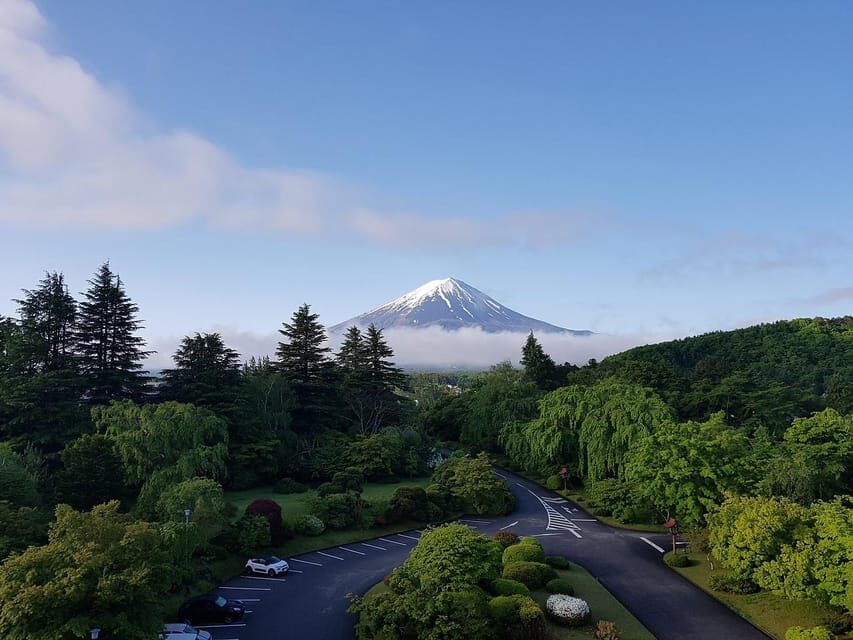
A clear view of Mt. Fuji is a whole travel event. This private day trip pairs flexible Tokyo pickup with two different route styles, so you can chase Fuji’s viewpoints or slow down in Hakone’s hot-spring country. I particularly love the big-photo stops (Arakurayama Sengen Park and Fuji 5th Station) and the fact that your driver can adjust pacing without turning it into a race. One thing to consider: weather can change everything, and the tour also depends on extra ride/entry fees you’ll pay along the way.
You’re not stuck with a bus full of strangers here. It’s a private group in an air-conditioned vehicle, starting at 8:30AM from Tokyo’s 23 wards, with handoff to six Tokyo pickup and six drop-off zones. If you’re traveling with up to five people, it can feel like a lot of day for one fixed price.
In This Review
- Key Things You’ll Really Like About This Private Day Trip
- Tokyo Pickup and a 10-Hour Clock You Can Actually Trust
- Choosing Between the Fuji-Five Lakes Day and the Hakone Hot Springs Day
- Route A: Fuji Majesty and the Fuji Five Lakes vibe
- Route B: Hakone calm, ropeway views, and Lake Ashi cruising
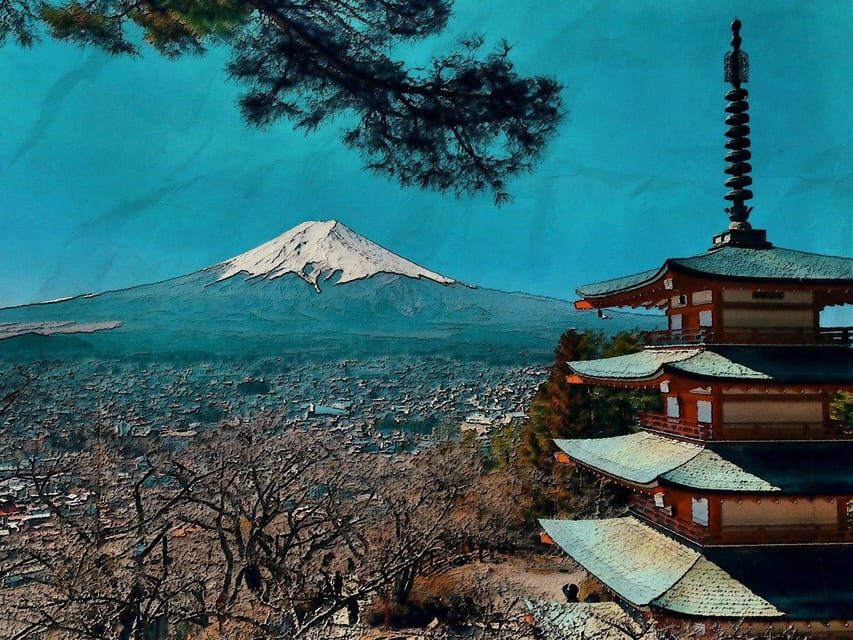
- Arakurayama Sengen Park and the Chureito Pagoda View Angle
- Mount Fuji 5th Station: What Halfway Up Really Gives You
- Lake Kawaguchiko: From Ropeway Views to Long-Tail Boat Time
- Oishi Park: The Easy Win for Flower Power and Quiet Walks
- Oshino Hakkai and Saiko Iyashi-no-Sato Nenba: Fuji Snowmelt Water Meets Old-Style Japan
- Hakone Ropeway, Lake Ashi Cruise, and the Open Air Museum
- Hakone Ropeway
- Cruise on Lake Ashi
- Hakone Open Air Museum
- Price and Value: What $419 Covers, What Adds Up
- Your Driver Matters: Flexibility, Safety, and Real Human Control
- What to Pack and How to Handle Fuji Weather
- Should You Book This Private Mt. Fuji and Hakone Day Trip?
- FAQ
- FAQ
- How much does the Mt. Fuji and Hakone private day trip cost?
- What time does pickup start, and how late could you be?
- Where can you be picked up in Tokyo?
- Where are drop-off locations?
- Is lunch included?
- What tickets or entry fees are not included?
- What routes are available?
- Is this tour a private group?
- Do they provide English support?
- Is the tour wheelchair accessible?
Key Things You’ll Really Like About This Private Day Trip
- Door-to-door pickup and drop-off across multiple Tokyo neighborhoods, including major areas like Shinjuku and Shibuya
- Two route options: Fuji-Five Lakes focus (Arakurayama, 5th Station, Kawaguchi) or the Hakone-focused day (Ropeway, Lake Ashi cruise, Open Air Museum)
- High-impact photo stops like Arakurayama Sengen Park and Mount Fuji 5th Station, with guided time plus free time
- Tranquil Lake Kawaguchiko moments at Oishi Park and Oishi-area viewpoints, plus a long-tail boat option on the lake
- Professional driving and English support, including guides named Amir, Ishii, and Zubi in past groups
Tokyo Pickup and a 10-Hour Clock You Can Actually Trust
This tour starts at 8:30AM and runs about 10 hours, which is long enough to see real highlights but not so long you’ll melt before lunch. Pickup is included within Tokyo’s 23 wards, with options in Shinjuku, Shibuya, Minato, Shinagawa, Setagaya, and more. Drop-off mirrors the same neighborhood list.
Here’s the practical bit: you may be up to 30 minutes late due to traffic. That’s not unusual in Tokyo, but it matters if you’re connecting to another reservation the same evening. I recommend leaving your next plan flexible and building in buffer time after the tour returns.
You’ll ride in a modern, clean, air-conditioned private vehicle. That sounds basic, but on a Fuji-and-Hakone day where weather can flip fast and roads are busy, comfort helps you stay in a good mood.
More Mt Fuji & Hakone tours we've reviewed
Choosing Between the Fuji-Five Lakes Day and the Hakone Hot Springs Day
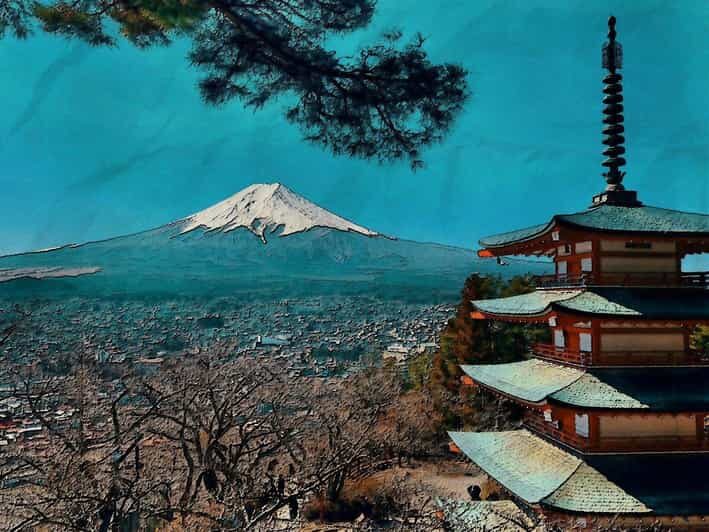
One of the smartest features is that you’re not locked into a single theme. You choose between two route styles:
Route A: Fuji Majesty and the Fuji Five Lakes vibe
This is the one if your main goal is Mt. Fuji views in multiple settings. You’ll get a run of classic Fuji stops: Arakurayama Sengen Park, a major shrine, Mount Fuji 5th Station, then the Lake Kawaguchiko area. Oishi Park and Oshino Hakkai close out the day, including time to walk and take photos.
Route B: Hakone calm, ropeway views, and Lake Ashi cruising
This is the one if you want Hakone’s signature transportation and art stop energy. You’ll still hit Arakurayama Sengen Park for one last Fuji look, then go to Oishi Park. After that, it’s Hakone Ropeway for aerial views, a cruise on Lake Ashi, and a final visit at the Hakone Open Air Museum.
If you like simple logic, use this rule: pick Route A for the strongest Fuji checklist. Pick Route B if you want a day that feels more varied and less centered on one mountain.
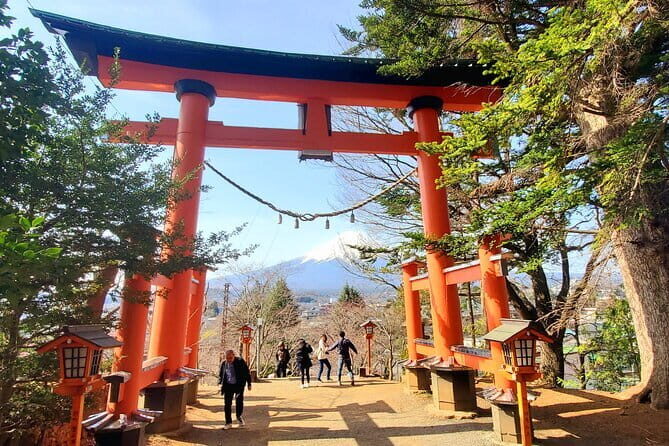
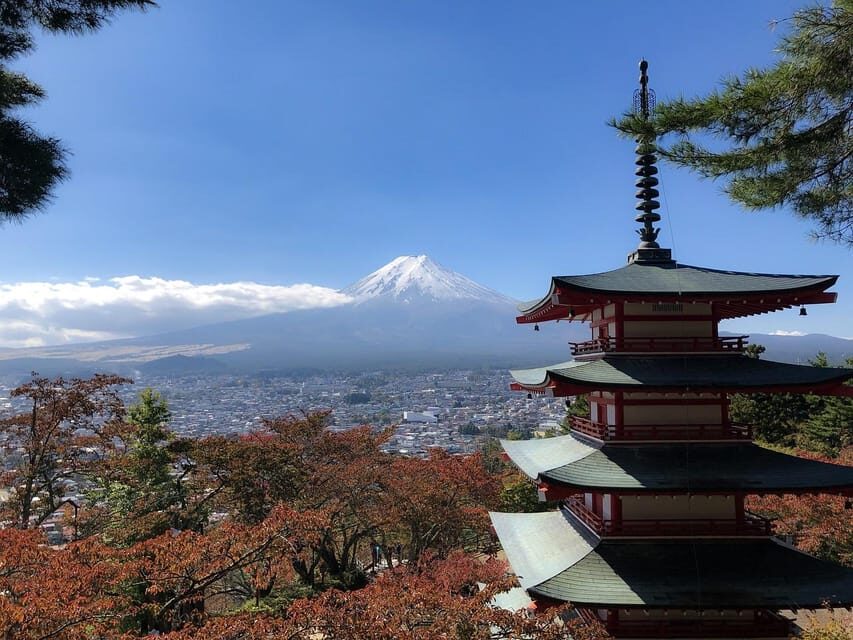
Arakurayama Sengen Park and the Chureito Pagoda View Angle
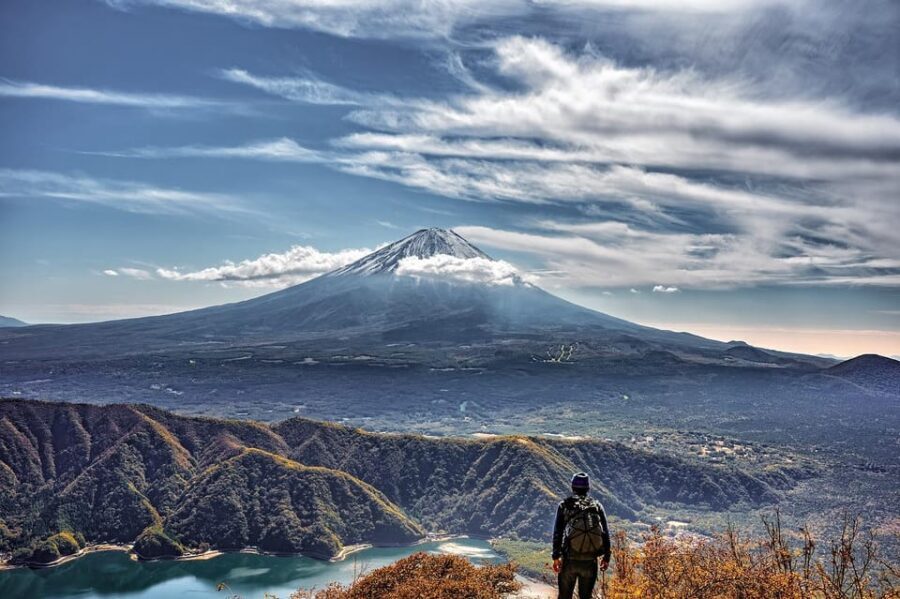
Both routes begin with Arakurayama Sengen Park, and that makes sense. It gives you a high, photo-friendly start—often the best way to gauge what kind of Fuji day you’re going to have.
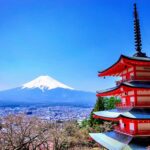
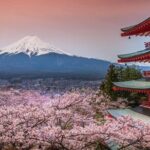
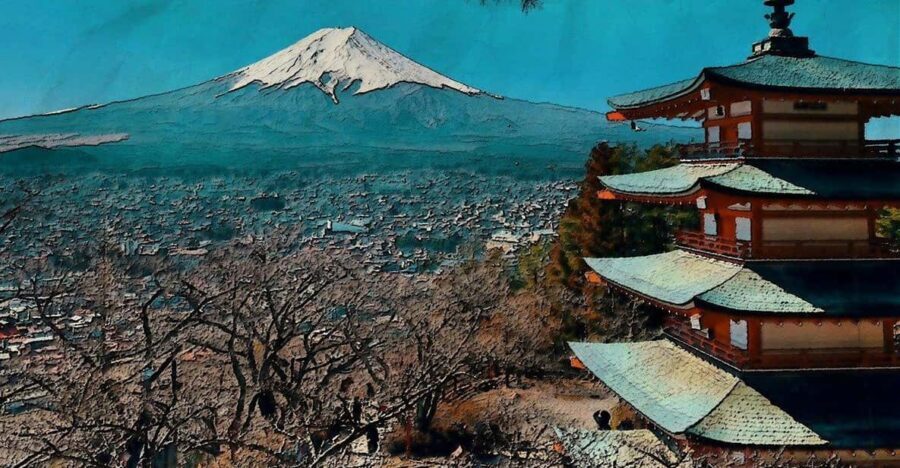
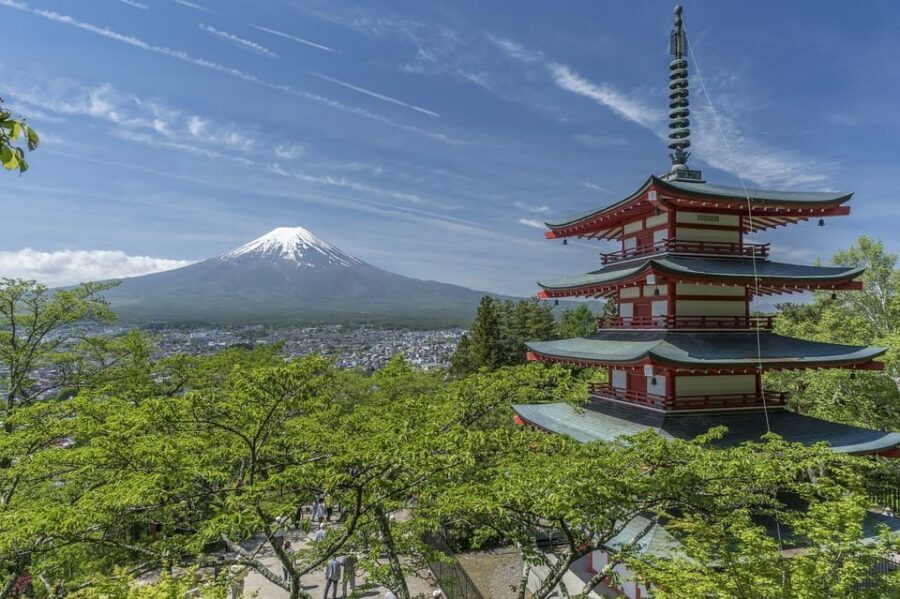
From the park area, you’re working toward one of Japan’s most photographed Fuji perspectives, tied to the Chureito Pagoda area at Arakura Sengen. Practically, this is valuable because it gives you a view early, before the day fills with roads, lines, and weather changes.
You’ll also have time built in: about 30 minutes here, with scenic viewing time. That means you’re not just rushing to a viewpoint and leaving immediately. If the mountain is showing, you can slow down and let your photos come together.
What can be frustrating here is also predictable: visibility. If clouds hug the mountain, you may get glimpses rather than a full-on postcard. Still, even partial views can be satisfying when you know you’ll get more chances later.
Other Tokyo + Mt Fuji + Hakone combo tours we've reviewed
Mount Fuji 5th Station: What Halfway Up Really Gives You
For Route A, the highlight is Mount Fuji 5th Station. This is the closest you’ll get to the mountain’s high-altitude feel without climbing. The stop includes guided time plus about 1 hour total for photo stop, sightseeing, and shopping.
Why it’s worth it: 5th Station sits at a point where you can often see a wide sweep of the countryside. If the sky behaves, it’s the day’s strongest “I’m really near Mt. Fuji” moment.
But be smart about expectations. Even when the day is sunny in Tokyo, conditions near the station can be colder or windier. If you run warm easily, bring a light layer anyway. If it’s foggy, you’ll still get the cultural experience of being at a major pilgrimage point, even if the views are muted.
Lake Kawaguchiko: From Ropeway Views to Long-Tail Boat Time
After Mt. Fuji 5th Station, the day shifts to Lake Kawaguchiko, which is one of the most photogenic ways to experience Mt. Fuji’s reflection potential and surrounding hills.
You’ll spend about 1.5 hours here, with a mix of guided and free time plus lunch on the schedule. There’s also a boat cruise option, and the plan includes a long-tail boat ride. Even if you skip the ride, having a chunk of time at the lake is useful. You can adjust to weather and choose where you want to stand for the best angle.
A big feature tied to the lake is the Mount Fuji Panoramic Ropeway, which rises roughly 400 meters from the eastern shore of Lake Kawaguchiko to an observation deck near the peak of Mount Tenjo. That’s the kind of vertical movement that makes a viewpoint stop feel more than just a flat photo session. You also get big views over the lake and over Mt. Fuji.
Cost note: ride tickets are not included. The ropeway and the cruise are listed as 500 yen per person. So if you’re budgeting tightly, add that into your planning.
Oishi Park: The Easy Win for Flower Power and Quiet Walks
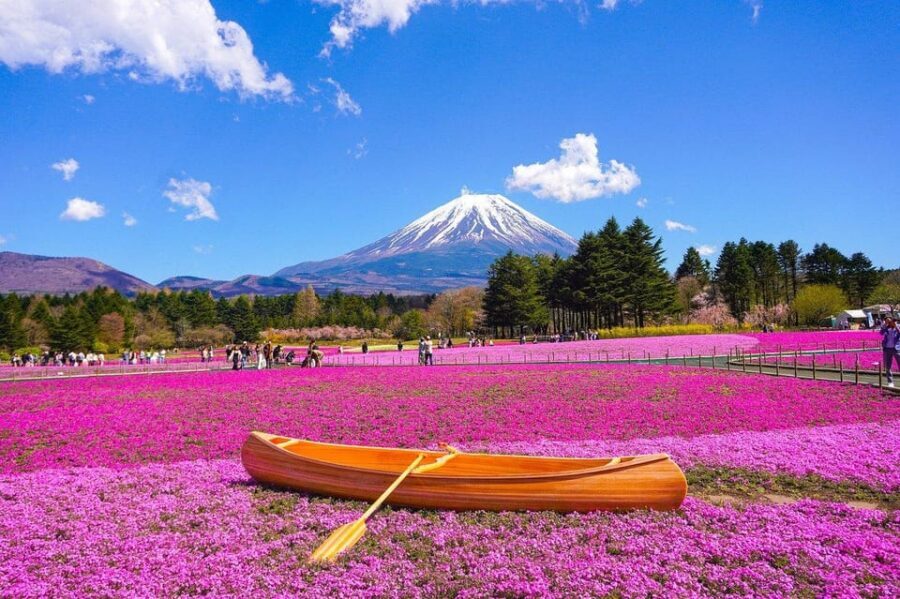
Then it’s Oishi Park, a stop with about 1 hour, mixing photo time, guided time, free time, and scenic viewing. Oishi Park is known for colorful blooms and classic Fuji angles along the lake.
Even if flowers aren’t at peak season, the park is still valuable because it gives you a low-stress, walkable environment where you can take your time. It’s also a good “reset” stop after busy transit and the more structured feel of a mountain station.
If you’re the type who likes photos but hates feeling rushed, this is one of the calmer segments. If you’re trying to maximize every minute, you can still squeeze in multiple viewpoint angles.
Oshino Hakkai and Saiko Iyashi-no-Sato Nenba: Fuji Snowmelt Water Meets Old-Style Japan
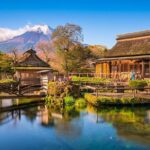
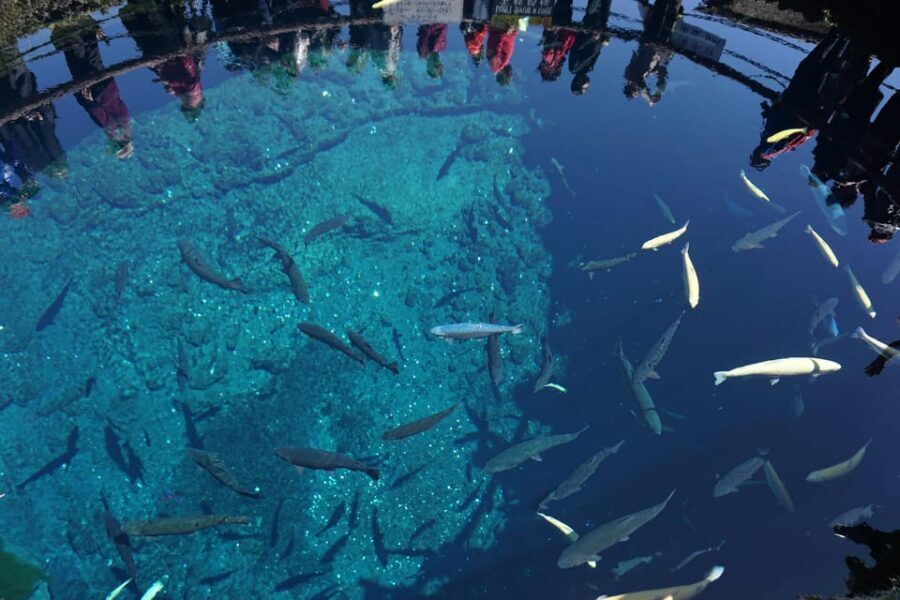
Route A ends with Oshino Hakkai, a short, focused 30-minute visit. This is the traditional village area fed by crystal-clear spring water from Mt. Fuji’s melting snow. You’ll see that distinctive pond layout with clear water and classic thatched-roof houses in the area.
Why this stop matters: it’s a slower cultural change from big-viewpoint sightseeing. Mt. Fuji views are visual drama. Oshino Hakkai is about the quiet details—water, tradition, and walking paths.
After Oshino Hakkai, you may also have a brief break-and-photo stop at Saiko Iyashi-no-Sato Nenba (listed as 30 minutes including photo stop and self-guided time). That’s where additional local-charm energy kicks in. Admission is listed as 500 yen per person, and that can be part of the “worth it” calculation depending on whether you love village-style strolling.
One caution: the Oshino Hakkai time is short. If you want long wandering time for photos, do your best to come with energy and comfortable shoes. You can’t turn this into a slow-day museum experience when the schedule is tight.
Hakone Ropeway, Lake Ashi Cruise, and the Open Air Museum
Route B adds a different kind of satisfaction: getting around Hakone in classic ways and ending with an art stop.
Hakone Ropeway
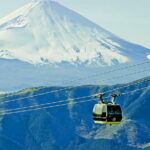
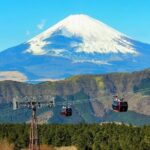
You’ll ride the Hakone Ropeway, which gives aerial views over lush valleys and across to Lake Ashi. This is great when Fuji visibility is unclear—because Hakone scenery can still deliver. The ride also helps break up the day so you’re not constantly in cars.
Cruise on Lake Ashi
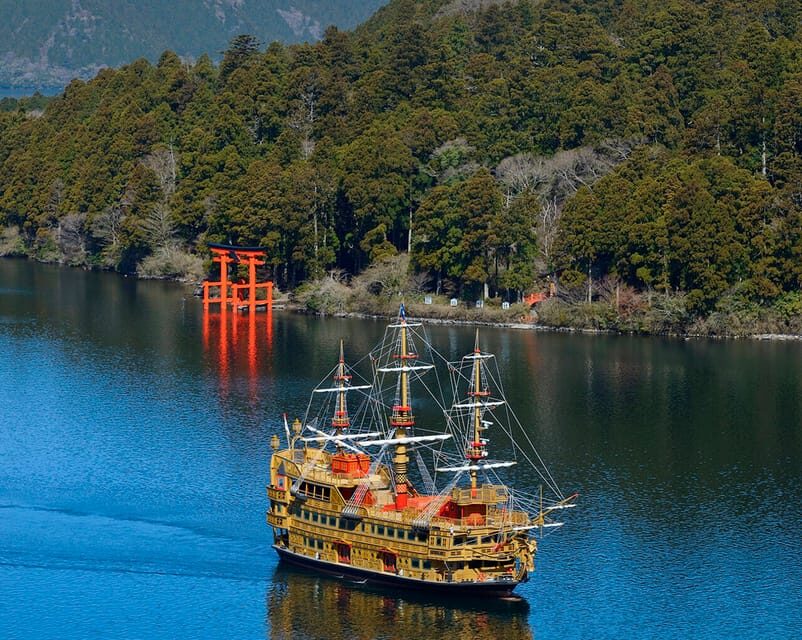
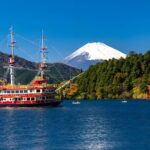
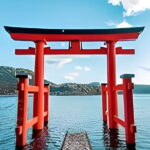
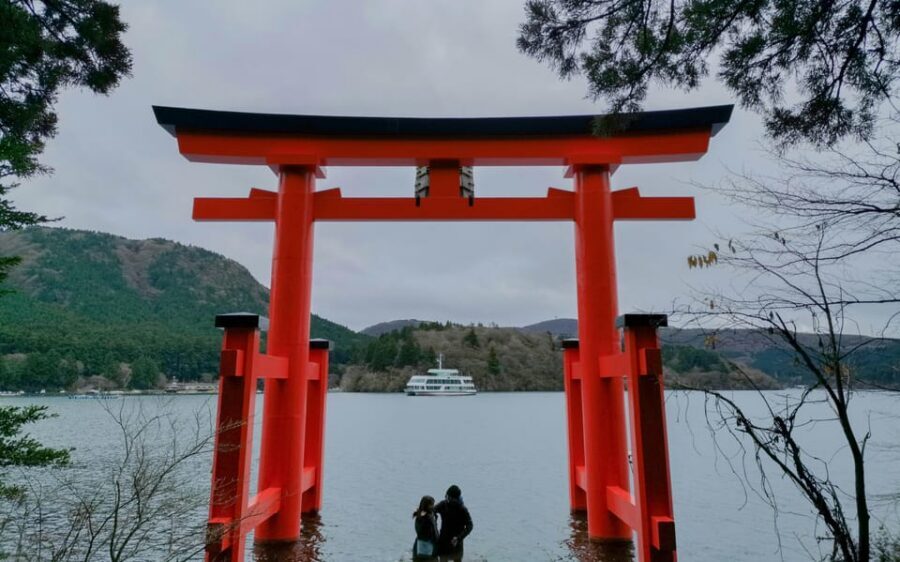
Next comes a sightseeing cruise on Lake Ashi. You’ll spend time gliding across the water with that calm, almost cinematic feel that only lakes can do. The cruise ticket is listed as 500 yen per person.
A practical tip: boats and lake air can feel cooler than you expect. Bring a layer, even in warmer months.
Hakone Open Air Museum
Finally, you’ll visit the Hakone Open Air Museum. You’ll have enough time to walk through at least the main areas, and the setting is part of the experience because the museum sits in an outdoor environment.
This ending works well because your brain gets a change of pace after viewpoints and transport. If you like art but don’t want it to become the whole day, this is a good mix.
Price and Value: What $419 Covers, What Adds Up
The price is $419 per group, for a private day trip up to five people. That means your real cost per person drops fast if you’re traveling as a small group.
Included costs (big value):
- Hotel pickup and drop-off within Tokyo’s 23 wards
- Private transportation in an air-conditioned vehicle
- English-speaking, professional driver
- Highway tolls and parking fees
Not included costs (the part you should budget for):
- Lunch
- Ropeway and cruise tickets at 500 yen per person
- Mt. Fuji entrance fee at 2100 yen per group
- Saiko Iyashi-no-Sato Nenba admission at 500 yen per person
- Subaro line admission at 2100 yen per person (listed, so you’ll want to confirm whether it applies to your specific route day)
Here’s how I think about value: the $419 fee covers the expensive part for many visitors—getting out of Tokyo, getting around, and not wasting half your day fighting transit connections. If you divide by five, it can feel like a fair deal compared with piecing together multiple trains, taxis, and guided stops on your own.
But do budget for add-ons. If your group is spending on multiple rides and entrances, you’ll want to plan ahead so the day still feels like a smart purchase, not a surprise bill at the cash register.
Your Driver Matters: Flexibility, Safety, and Real Human Control
This kind of day trip lives or dies by the driver. The best experiences come from guides who understand how to manage pacing and make small adjustments when plans meet reality.
In past groups, guides such as Amir, Ishii, and Zubi were highlighted for being helpful, calm, and attentive. One guide handled a rainy day with good pacing, and another was described as flexible with schedule and patient when guests wanted more time at certain viewpoints.
That flexibility is not a small thing. Mt. Fuji days can change fast. Clouds can roll in. Lines can move. If your driver can adapt without you feeling like you’re being rushed, the whole experience improves.
Now, a consideration you should take seriously: you’re paying for a private experience, so you want confidence in the driver’s competence. If you feel nervous at any point, you can ask for a quick recap of the day’s order and confirm which stop comes first at key ride points. That’s not being difficult—it’s being practical.
What to Pack and How to Handle Fuji Weather
Fuji is famous for weather mood swings. A clear day can turn into fog. A “warm” day in Tokyo can feel cold near a mountain station and over the water.
Bring:
- a light layer (wind can be a factor up high)
- a compact rain layer (even when skies look fine)
- comfortable walking shoes (Oshino Hakkai and museum areas involve walking)
- a charged phone/camera for long viewing gaps
Also, don’t plan something tight immediately after the tour ends. With pickup times influenced by Tokyo traffic, your return timing is part of the day’s rhythm.
Should You Book This Private Mt. Fuji and Hakone Day Trip?
I’d book it if you want one guided day that handles the heavy lifting: getting out of Tokyo, hitting the big Fuji or Hakone moments, and doing it in a private vehicle. It’s especially worth it if you’re traveling with 3 to 5 people and want to keep the day efficient.
I might skip it if you’re hunting only one single must-do attraction and you’re comfortable piecing together transit and tickets yourself. This is a full-day package, not a single-stop shortcut.
If you’re deciding between Route A and Route B, pick based on your mood:
- Want the strongest Fuji viewpoints and traditional pond village time? Choose Route A.
- Want a Hakone day built around ropeway views, Lake Ashi cruising, and an open-air art stop? Choose Route B.
FAQ
FAQ
How much does the Mt. Fuji and Hakone private day trip cost?
It costs $419 per group, for up to 5 people, and runs about 10 hours.
What time does pickup start, and how late could you be?
Pickup starts at 8:30AM. Due to traffic, pickup can be up to 30 minutes late.
Where can you be picked up in Tokyo?
Pickup is available in Tokyo’s 23 wards, with options including Shinjuku City, Shibuya City, Minato City, Shinagawa City, Setagaya City.
Where are drop-off locations?
Drop-off is available in Shinjuku City, Setagaya City, Shibuya City, Minato City, Shinagawa City.
Is lunch included?
No. Lunch is not included.
What tickets or entry fees are not included?
Not included are tickets/fees such as ropeway and cruise (500 yen per person), Mt. Fuji entrance fee (2100 yen per group), Saiko Iyashi-no-Sato Nenba (500 yen per person), and Subaro line (2100 yen per person).
What routes are available?
You can choose between a Mt. Fuji-focused route and a Hakone-focused route. The Hakone route includes the ropeway, Lake Ashi cruise, and the Hakone Open Air Museum.
Is this tour a private group?
Yes. It’s a private group.
Do they provide English support?
Yes. The driver provides English and Japanese.
Is the tour wheelchair accessible?
Yes. It is listed as wheelchair accessible.